
Making a listing impression
Types of product knowledge
Offer practical experiences
Making a listing impression
Types of product knowledge
Offer practical experiences
Making a listing impression
Types of product knowledge
Offer practical experiences
Making a listing impression
Types of product knowledge
Offer practical experiences
Making a listing impression
Types of product knowledge
Offer practical experiences
Making a listing impression
Types of product knowledge
Offer practical experiences
Limited-time savings
Value-added service bundles
Suitable for new projects
Limited-time savings
Value-added service bundles
Suitable for new projects
Limited-time savings
Value-added service bundles
Suitable for new projects
Limited-time savings
Value-added service bundles
Suitable for new projects
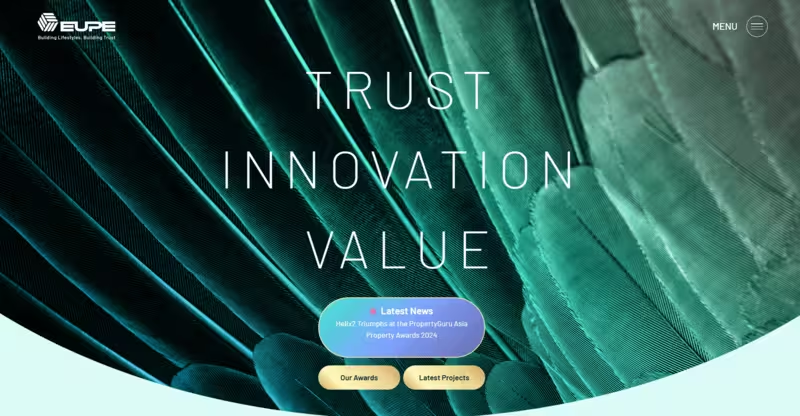 EupeProperty Development – Residential & Sustainable CommunitiesEupe Corporation is a Malaysian property developer behind award-winning residential projects and sustainable communities.
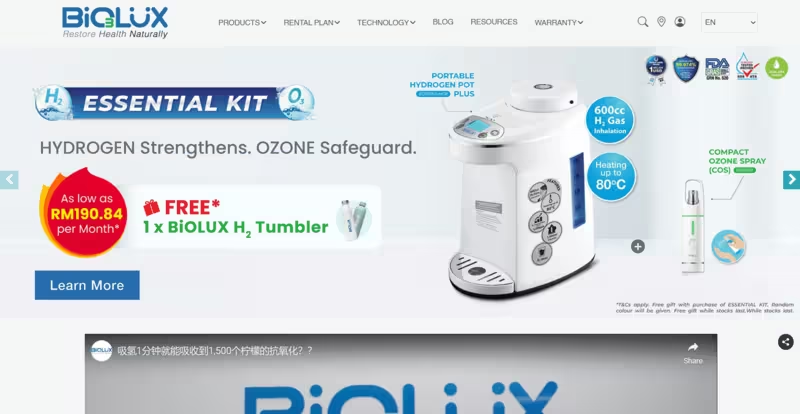 Biolux AsiaHealth Technology – Ozone & Hydrogen Hygiene DevicesBiolux offers ozone disinfection systems, hydrogen-based wellness devices, and sanitation solutions. View archive





Discover how we help brands build impactful digital experiences through strategy, design and development.
Hacked website repair and malware removal for WordPress, Joomla, PHP and other open-source websites.
If your website has been hacked, infected with malware, redirecting visitors, showing Google security warnings or behaving abnormally, we can help investigate the problem, remove malicious content and recover the website.

Investigate the compromise, clean malicious changes, restore normal operation and reduce the risk of reinfection.
Malicious redirect
Suspicious PHP files
Unknown administrator
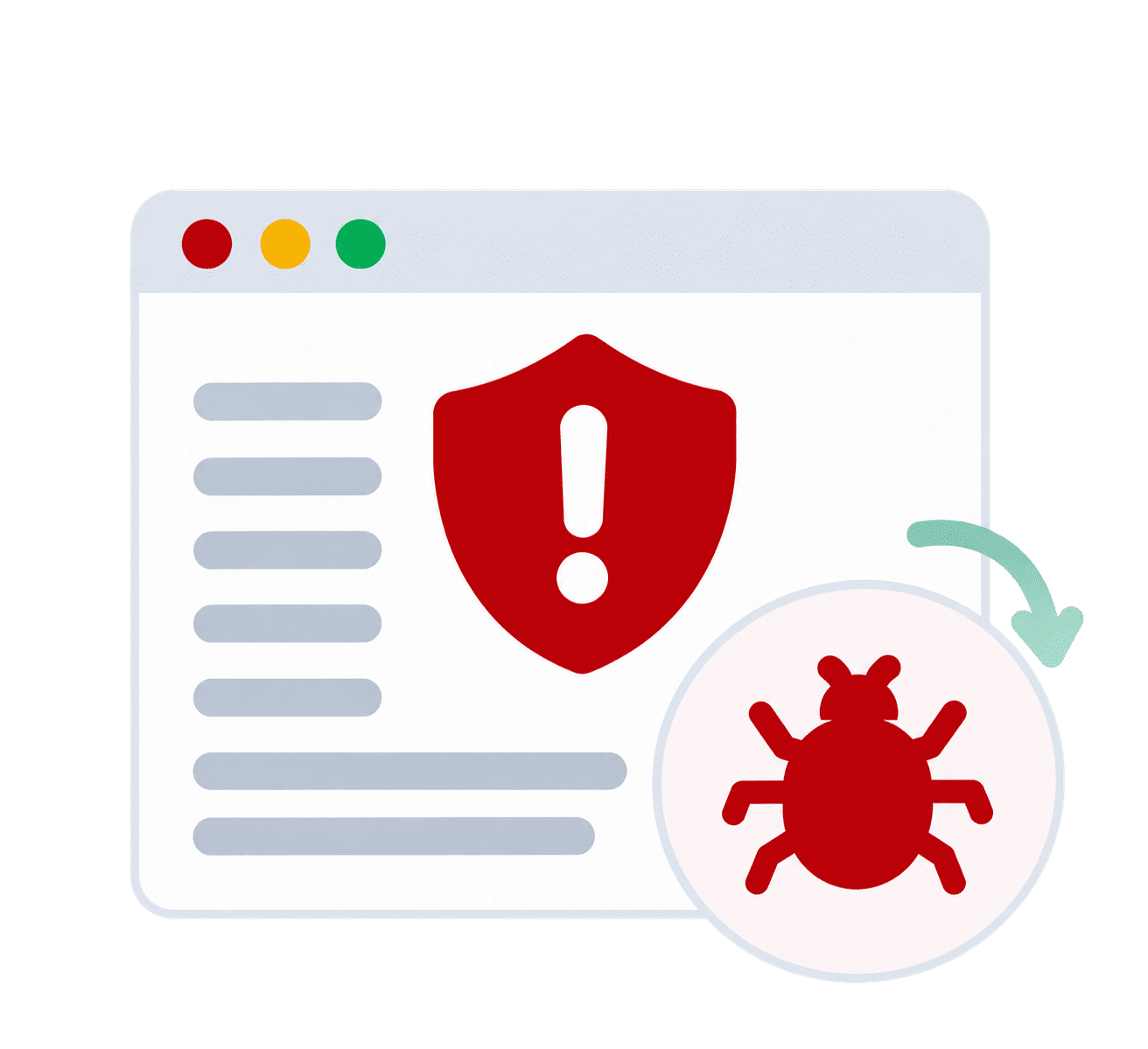

Visitors are sent to scam, ad or unfamiliar pages.

Google or browsers may flag your website as unsafe.

Injected spam pages, strange links or unusual search results appear.

Unfamiliar administrator or privileged accounts are discovered.

Your site content, layout or functionality changes unexpectedly.

Identify the cause and scope of the compromise.

Remove malware, backdoors and unauthorised changes.

Repair files, restore content and fix configuration issues.

Reduce reinfection risk with practical hardening steps.

A compromise may involve files, admin access, database, hosting or plugins.

WordPress, Joomla, PHP applications and other open-source websites.

We help address likely entry points, not just visible symptoms.
A hacked website does not always display an obvious “hacked” message. Sometimes the first sign is unusual website behaviour, unexpected content or warnings from Google or web browsers.

Your website unexpectedly sends visitors to another website, advertising page, scam page or unfamiliar domain.

Visitors may see security alerts or Safe Browsing warnings.

Unknown pages, foreign-language content, gambling pages, suspicious links or unusual search results suddenly appear.

The website was cleaned before, but malware or suspicious files keep returning.

You discover unfamiliar administrator, CMS or privileged user accounts that you did not create.

Your website layout, content, homepage, files or functionality suddenly changes without explanation.
Our recovery process focuses on restoring your website, removing malicious code and identifying likely causes of compromise so the same problem is less likely to return.
Assess what happened and determine the extent of the compromise before making unnecessary changes.

Website & PHP files
CMS admin accounts
Database & configuration
Logs, backups & hosting
Plugins, themes & modules
Remove identified malicious components and unauthorised changes across the affected environment.
Malware & injected scripts
Backdoors & redirects
Spam pages & SEO spam
Unknown administrators
Suspicious scheduled tasks
Restore the website to normal operation after malicious components have been removed.
Repair damaged files
Restore legitimate content
Correct configuration
Resolve redirect issues
Verify front & back end
Review practical security measures to reduce the likelihood of reinfection.
Update vulnerable components
Reset relevant credentials
Review permissions & access
Hardening / WAF guidance
Improve backup practices

A hacked website is not always caused by one infected file. The compromise may involve multiple parts of the website and hosting environment.
CMS vulnerabilities
Compromised administrator accounts
Malicious PHP files
.htaccess modifications
Vulnerable custom code
Hosting-level configuration issues
Compromised third-party access
Outdated plugins or extensions
Stolen FTP / SFTP / SSH credentials
Database injections
Malicious scheduled tasks or cron jobs
Infected backups
Weak or compromised passwords
Hidden backdoors
A malware scanner may identify suspicious files, but effective recovery often requires understanding how the compromise happened and whether a backdoor or vulnerable entry point remains. Where appropriate, our investigation may also extend beyond the website itself to the surrounding hosting and security environment.
If malware returns after a cleanup, the visible infection may only be the symptom. A hidden backdoor, vulnerable component, compromised account or unresolved entry point may still remain. Repeatedly removing infected files without fixing the underlying cause can result in the website being compromised again.
Repeated reinfection usually means something
important has been missed.
Malicious redirects, browser warnings and injected spam pages can behave very differently. Each needs to be traced back to the underlying website compromise rather than treated only at the surface.
A compromised website may silently redirect visitors to advertising, scam, gambling, phishing, malicious download or unrelated websites. Redirects may affect all visitors, or only mobile, first-time, Google, country-specific or selected-page traffic.
Google and web browsers may display warnings such as “Deceptive Site Ahead”, “This Site May Be Hacked”, “Dangerous Site” or other Safe Browsing alerts. The underlying compromise normally needs to be resolved before the relevant review process can be carried out.

Compromised websites can generate Japanese keyword spam, gambling or casino content, pharmaceutical pages, foreign-language pages, fake products, injected links and other SEO spam that may appear in Google without being visible in normal navigation.
We commonly assist with compromised WordPress, Joomla, PHP applications and other open-source websites, depending on the application and condition of the codebase.

Malware, malicious plugins or themes, suspicious files, redirects, unauthorised admin accounts and recurring reinfection.

Malicious extensions, injected files, compromised administrator accounts, suspicious database content and website recovery.

Custom PHP websites and applications affected by malicious files, compromised code or unauthorised changes.

Send us the website URL and a brief description of the problem. We can assess whether it falls within our recovery scope.
In many cases, yes. But successful recovery depends on the severity of the compromise, codebase condition, application version, database damage, backups and the hosting environment.
If a website is severely outdated, extensively compromised or unsafe to restore, we will explain the situation and recommend a more practical alternative. In some cases, rebuilding may be safer and more cost-effective.
These help determine whether a safe cleanup and recovery approach is practical.


A clean backup can make recovery easier, but many website owners discover during an incident that their backup situation is not as reliable as expected.
A missing clean backup does not automatically mean the website cannot be recovered. We can inspect the current website and determine whether a safe cleanup and recovery is practical.
Backups are unavailable
Backups are outdated
Backups are also infected
Automated backups have overwritten clean copies
The backup system was never properly configured

Website incidents can extend beyond the CMS. Our approach combines website, hosting and practical security remediation with clear business-friendly communication.

Where appropriate, we review the surrounding hosting and server environment as part of the investigation.

We work with common open-source platforms and PHP applications rather than limiting recovery to one CMS.

We look for weaknesses, suspicious access and issues that may contribute to repeated compromise.

We explain what we find and what needs to be done in practical, understandable language.
Once the website has been recovered, the next step should be reducing the risk of another incident. This connects naturally to The Safe Web Movement and Web Temple's wider website security services.

Strengthen common weak points and reduce exposed attack surfaces.

Keep core components, plugins, extensions and credentials under better control.
Improve backups, monitoring, firewall/WAF protection and recovery readiness.
Helping you make informed decisions
Urgent website incidents are prioritised for assessment. Response and recovery time depend on the severity of the compromise, website size, available access and complexity of the application.
Yes. We can investigate WordPress malware infections, suspicious files, malicious plugins or themes, unauthorised accounts, redirects, injected content and recurring infections.
Yes. We can investigate and recover compromised Joomla websites, including suspicious extensions, modified files, database injections and administrator account issues.
Yes, depending on the application and condition of the codebase. We can assess PHP-based websites and applications affected by malicious code, compromised files or unauthorised changes.
The underlying compromise must first be identified and resolved. Once the website is clean and secured, the relevant Google review process can be carried out where applicable.
Yes. Malicious redirects are a common symptom of website compromise. We can investigate the website to identify the source of the redirect and remove the malicious components where possible.
Recurring malware may indicate a hidden backdoor, vulnerable plugin or extension, compromised credentials or another unresolved entry point. In this situation, a deeper investigation is normally required.
Yes. A clean backup is helpful but not always available. We can assess the current website and determine whether it can be safely cleaned and recovered.
The cost depends on the website platform, size, severity of compromise and amount of investigation and recovery work required.
We recommend assessing the incident before providing a recovery quotation.
Where applicable, the recovery process includes practical security remediation and recommendations to reduce the likelihood of repeat compromise.
Whether you are already with Web Temple or exploring us for the first time, this campaign gives you a practical way to strengthen your website protection through a structured Cloudflare setup.